

Don’t be missed
Every day, 96 loved ones go missing because of lung cancer.
Lung cancer often shows no early symptoms, but when caught early, it’s easier to treat, and lives can be saved. That’s why the NHS Lung Health Check is so important. It’s free, quick, and offered to people aged 55–74 who’ve ever smoked.
Despite this, uptake remained low. Many eligible patients weren’t responding to invitations. So, our campaign set out to change that, by making the message impossible to ignore, emotionally resonant, and tailored to real lives.
The challenge: reaching the people who need it most
Up to 75% of invited patients weren’t attending. Many felt fine, especially if they’d quit smoking years ago. Others feared the outcome or worried about logistics. We needed to shift attitudes, overcome fear, and reach not just patients, but the people who influence them most.
Our strategy: Reframe. Reconnect. Reach
Using behavioural models and audience personas, we built a campaign that:
- Reframed the message with emotionally resonant storytelling.
- Reconnected with real lives through relatable scenarios and patient stories.
- Reached audiences through geo-targeted digital channels and community spaces.
We also targeted loved ones, family, friends, carers, encouraging them to nudge eligible patients to book their check. The message became a shared one: getting screened isn’t just about you, it’s about the people who care about you.
Creative that moves people
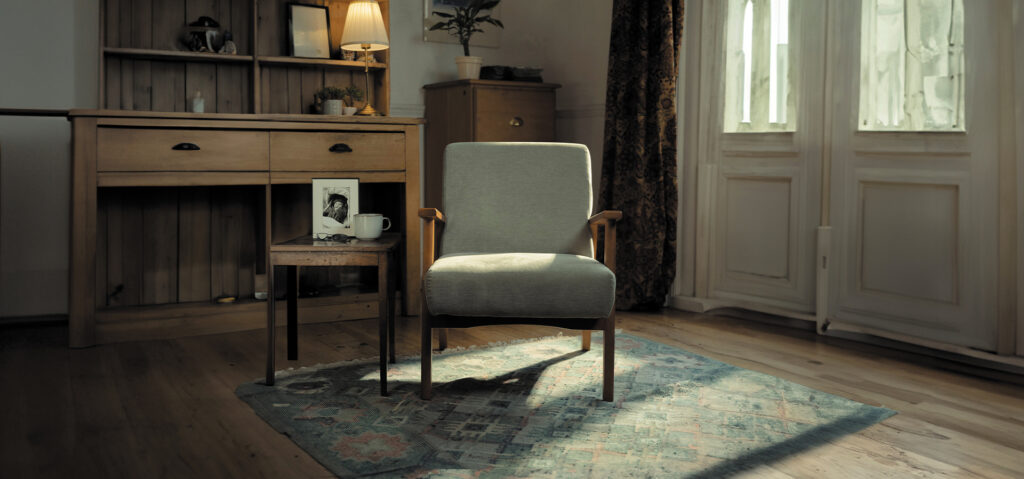
The campaign centred on a simple, powerful idea: the empty chair. A visual metaphor for someone missing, symbolising the loss lung cancer can bring if not caught early.
We created:
- A hero film featuring empty chairs in everyday settings.
- A hub film sharing a real patient’s remission story.
- Social shorts tailored to different personas and barriers.
- A consistent visual identity across all assets.
The creative was rigorously tested and refined through focus groups, surveys, and A/B testing with over 25,000 participants. It was shortlisted for the Purpose Awards 2025 – Best Health Cause Campaign.
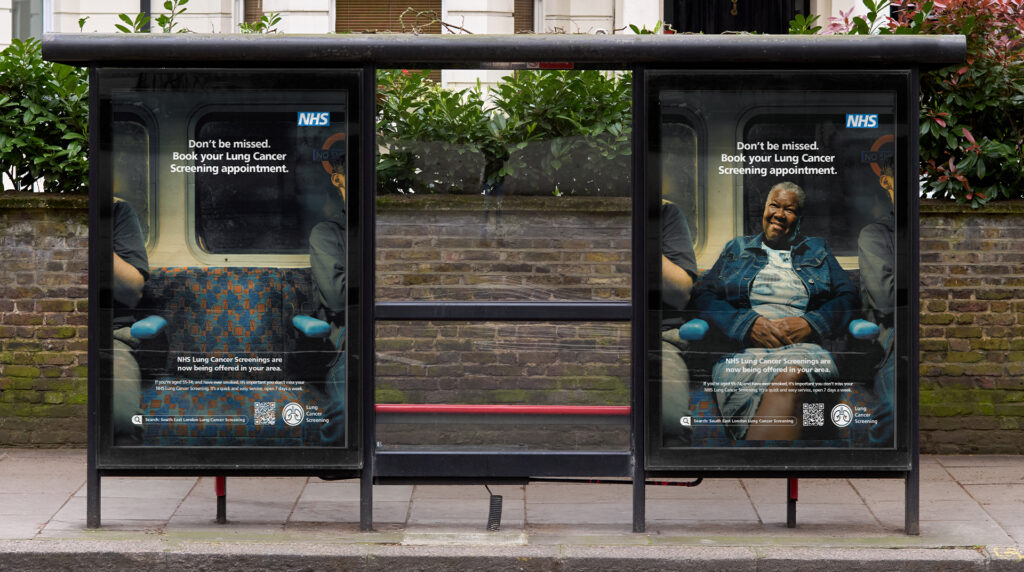
Smart Spend. Real Impact
- 18,008 clicks to the campaign page
- 1.4M+ impressions
- Meta CTR: 1.58% | Google Search CTR: 7.82% | Display CTR: 1.10%
- YouTube view rate: 59.37%
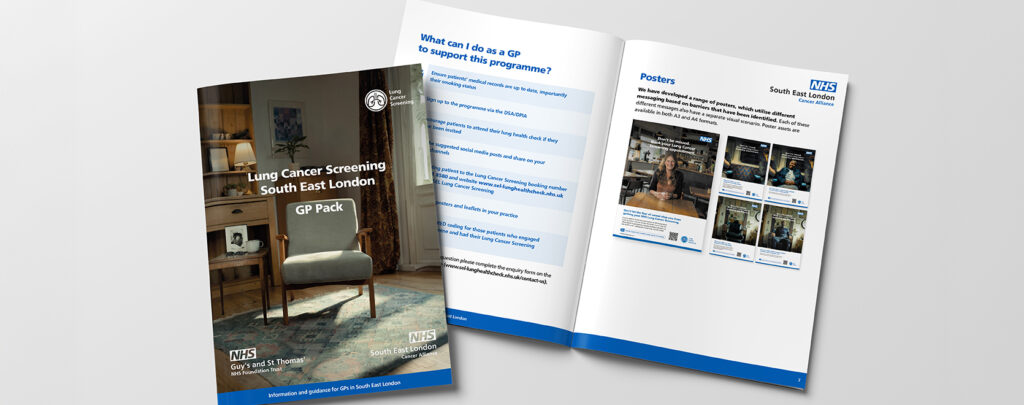
We also produced a partner toolkit to support outreach in diverse communities across South East London.
From awareness to action
This campaign didn’t just raise awareness, it sparked conversations. By targeting loved ones alongside eligible patients, we created a ripple effect of encouragement and support. Family members, friends, and carers became powerful advocates, nudging those they care about to take action. The message was no longer just personal, it was shared. And that shift helped turn hesitation into hope, leading more people to book their lung health checks and take a vital step toward early detection.
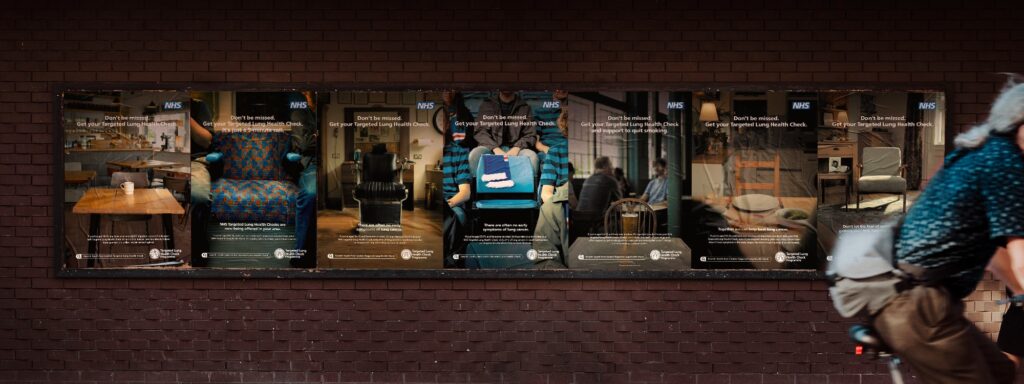
Roll out included a geo-targeted digital campaign on Facebook, Instagram, YouTube and Google reaching patients and loved ones over 6 weeks. We achieved high frequency and impact with our hero film and supporting hub content. We also partnered locally with organisations who could help us create and share multilingual content. This resulted in a partner toolkit including posters, videos, infographics and social media content so the community leaders could help spread the message.